
Last updated November 15, 2026
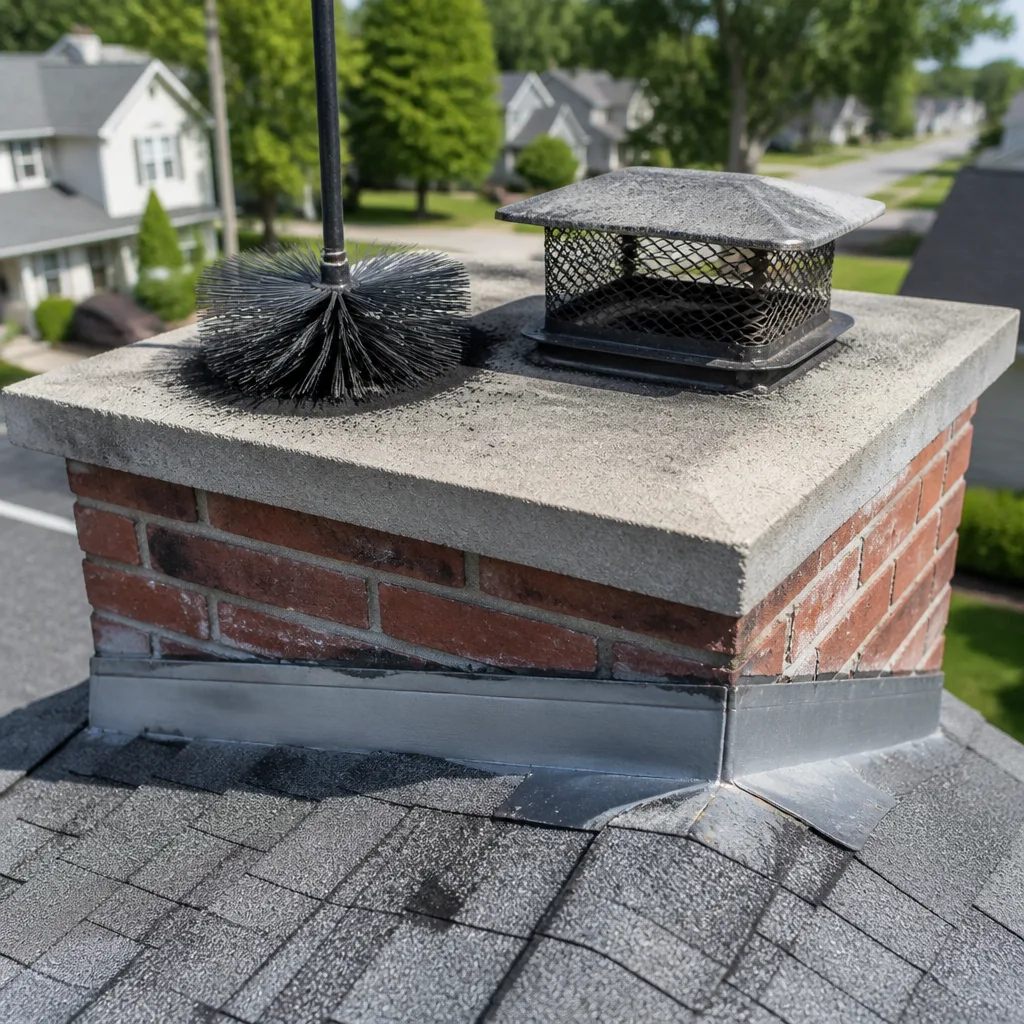 Sweep & inspection
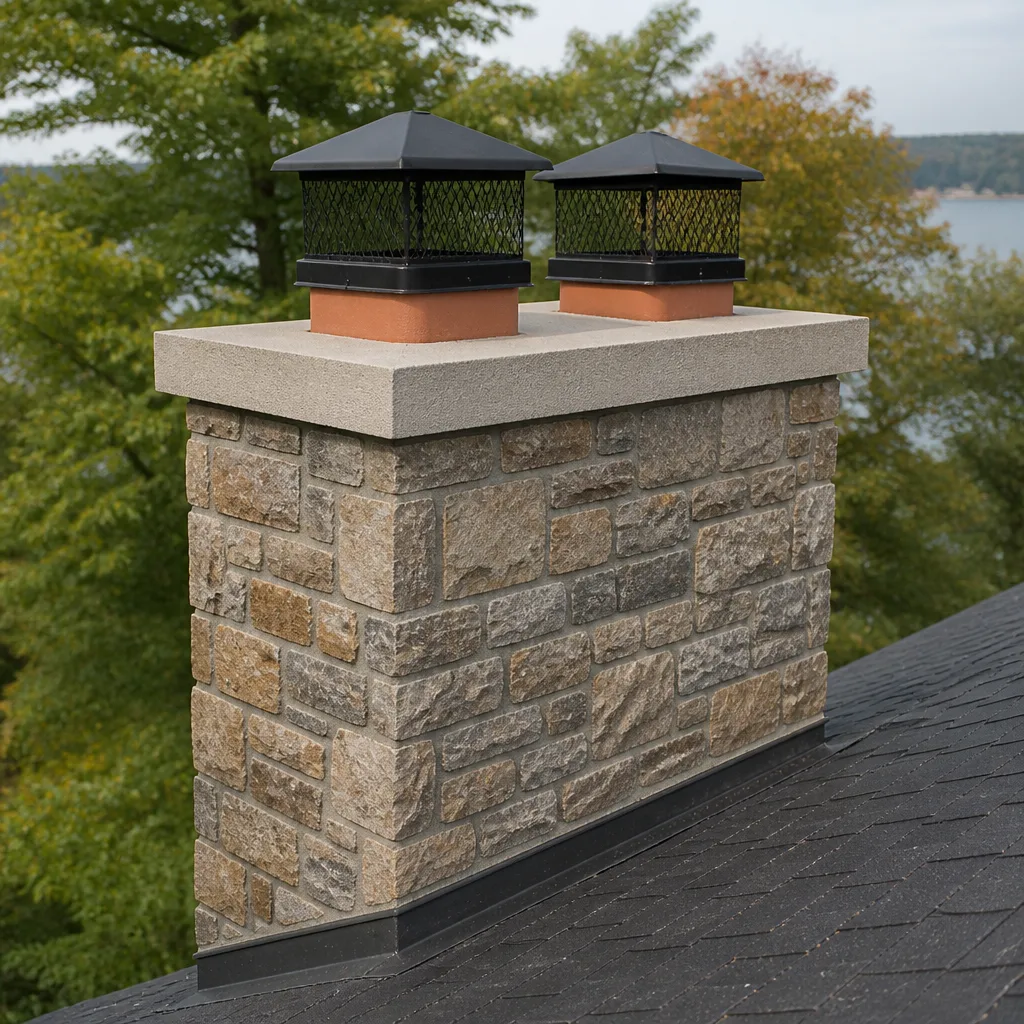 Caps & crowns
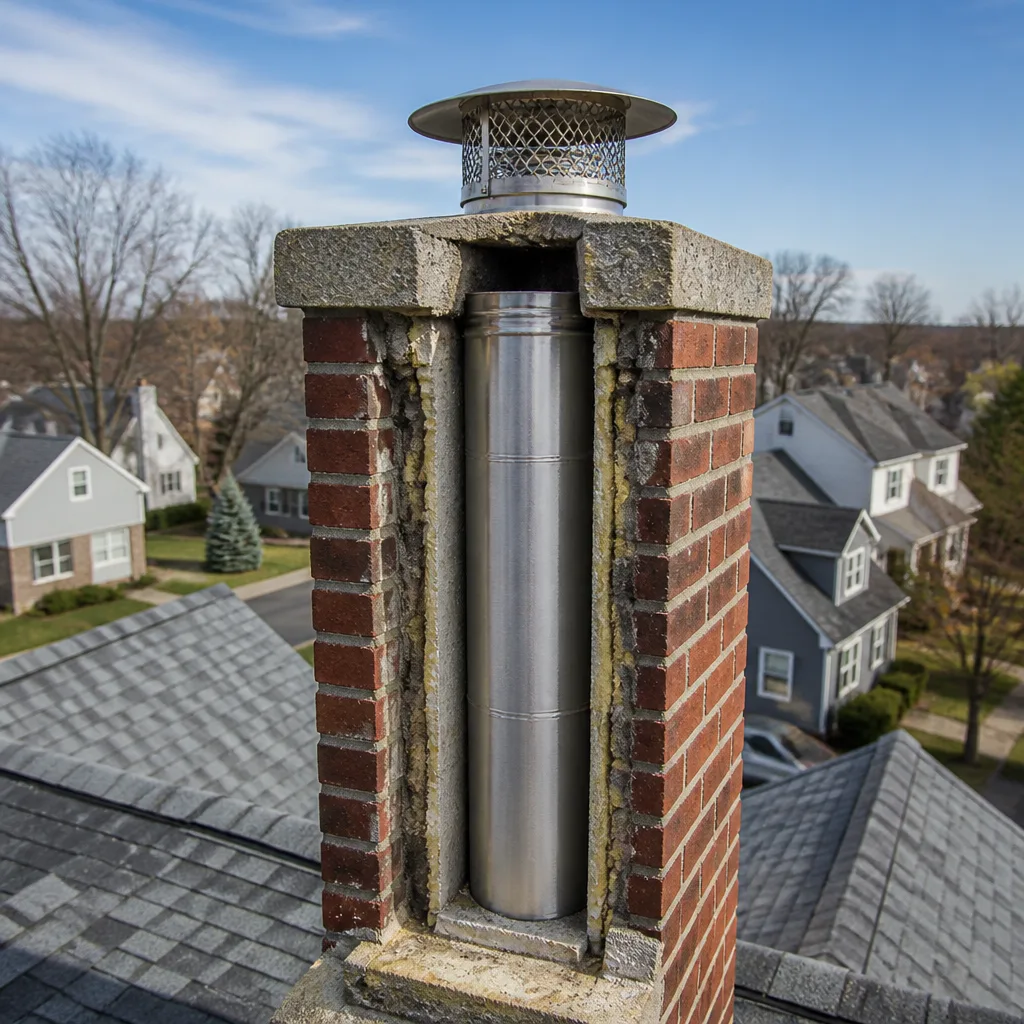 Flue relining
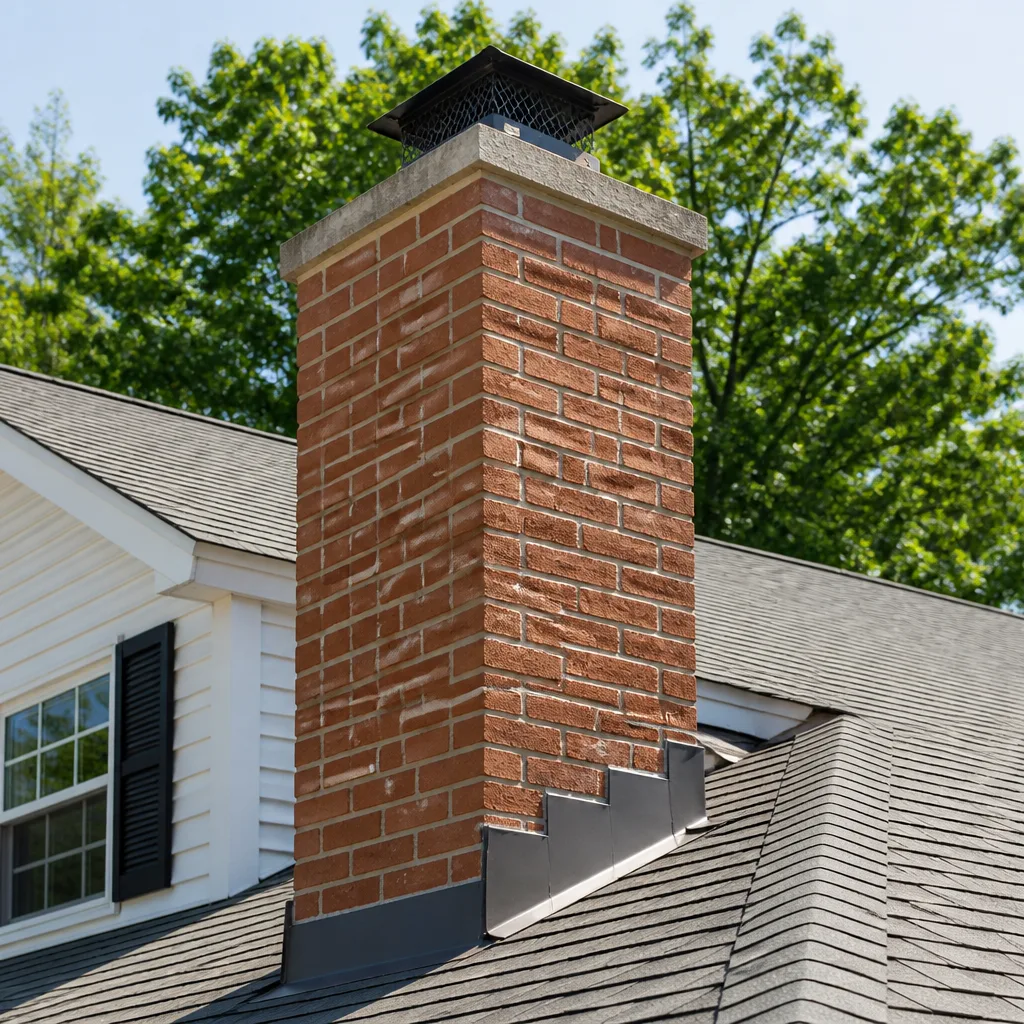 Masonry repair
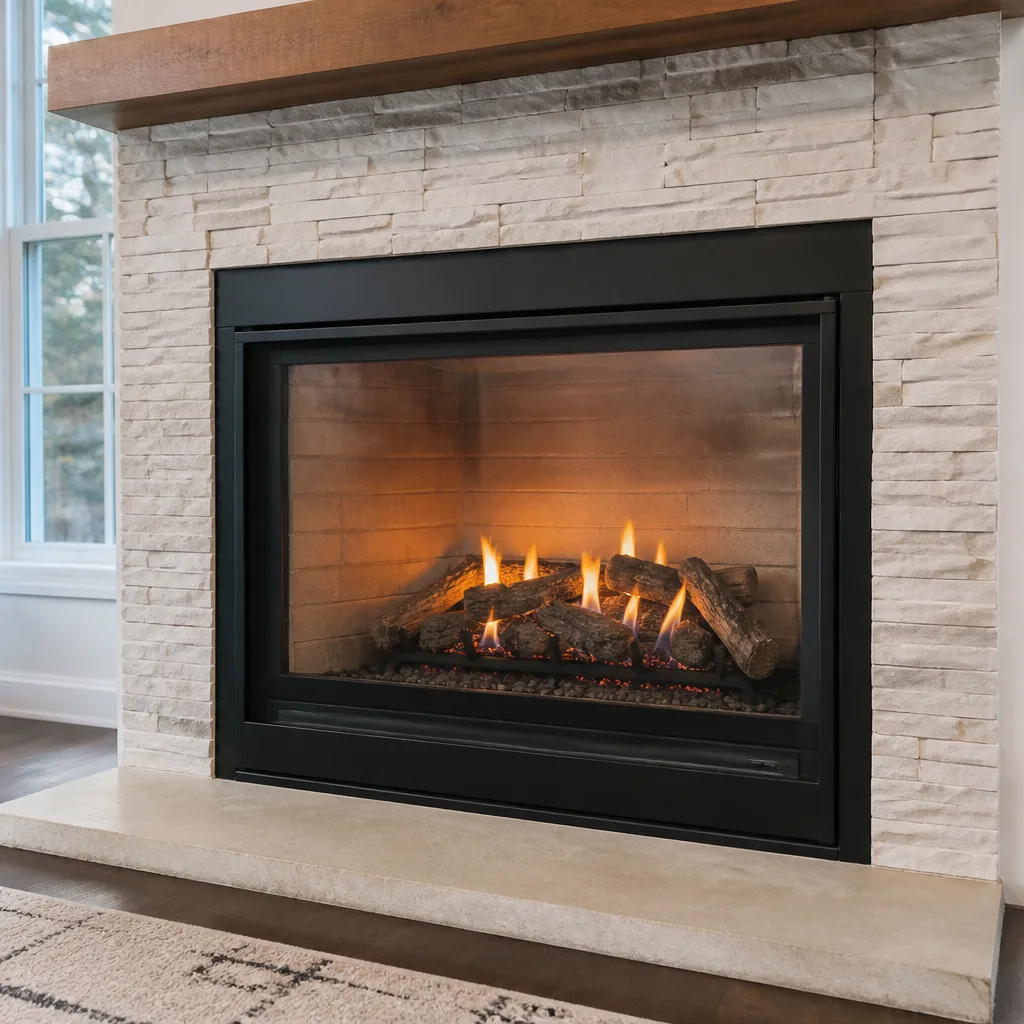 Gas fireplace service
Level 1 sweep and inspection to the NFPA 211 annual standard - flue, crown, cap, and flashing checked and photographed
Chimney sweep logs do not sweep chimneys. They loosen some creosote - which then falls where a brush and vacuum still have to collect it.
Chimney Sweep Troubleshooting in Chandler: Common Problems and How to Fix Them
When smoke rolls into your living room, the instinct is to blame the chimney. Creosote, a blocked flue, a bird nest – those are the usual suspects. But in our experience across Chandler, a good share of “the fireplace is acting weird” complaints come down to pressure, not creosote. An energy-efficient house can be so tight that it starves the fire of air and pushes exhaust back into the room. The chimney is fine. The house is the problem.
This guide is built as a diagnostic map, not a checklist. Each symptom you’ll read about points to a specific cause, so you can stop guessing and start narrowing down. We’ll cover draft failures, white stains on the chase, the difference between a chimney fire and normal combustion noise, gas pilot trouble, and how Chandler‘s hard water quietly eats away at metal parts faster than most homeowners expect.
Quick Answer
Most chimney problems in Chandler trace back to one of six root causes: negative pressure in a tight house, a physical blockage like a nest or creosote ridge, water infiltration through the chase, a chimney fire that needs inspection, a fouled thermocouple on a gas fireplace, or corrosion from hard-water mineral deposits. Matching the symptom to the cause is what a proper diagnosis does, and it’s the difference between a $180 sweep and a liner replacement you didn’t actually need.
Styles & brands we work with
- Sweep & inspection
- Caps & crowns
- Flue relining
- Masonry repair
- Gas fireplace service
Table of Contents
- Why Smoke Comes Into the House When the Chimney Isn’t Blocked
- Physical Blockages: Bird Nests, Creosote Ridges, and What Actually Blocks a Flue
- White Stains on the Chase: What Efflorescence Predicts About Your Liner
- Chimney Fire vs. Normal Combustion Noise: How to Tell the Difference
- Gas Fireplace Pilot Problems: Why It’s Usually the Thermocouple
- How Chandler’s Hard Water Corrodes Caps and Dampers
- A Step-by-Step Diagnostic Sequence You Can Follow Yourself
- Common Mistakes to Avoid
Why Smoke Comes Into the House When the Chimney Isn’t Blocked
Smoke spilling into the room on a chimney with a clear flue is almost always a pressure problem, not a blockage. The fireplace needs to pull air from the room to feed the fire and send exhaust up the flue. In a house that’s sealed tight – new windows, spray foam, weatherstripping, a tightly gasketed attic hatch – the fire can’t get enough make-up air, and the pressure balance flips. Instead of the chimney drafting up and out, the house pulls air down the flue.
Chandler has a lot of newer construction and a lot of retrofitted energy upgrades. Both create tight envelopes. We’ve walked into homes where the homeowner was convinced they had a creosote problem and the flue was spotless. The real issue was a bath fan, a kitchen hood, or a clothes dryer all pulling air out of the house at the same time the fire was trying to pull it in.
Signs you’re dealing with pressure, not blockage
- The smoke appears mostly on startup, then clears once the fire is hot.
- It gets worse when the kitchen fan, bath fan, or dryer is running.
- It happens more on windy days or when a door slams.
- The flue looks clear on a camera inspection, and there’s no heavy creosote load.
Quick diagnostic steps
- Crack a window a half inch nearest the fireplace and light a small test fire. If the smoke stops, you’ve confirmed a pressure problem.
- Turn off all exhaust fans and the dryer, then relight. If draft returns to normal, your house is starving the fire for air.
- Check that the damper is fully open. A partially closed damper produces the same symptom and takes ten seconds to rule out.
If the window test solves it, the fix is a dedicated outside-air supply or a properly sized flue upgrade. That’s a repair, not a cleaning. If you’d rather have the whole system checked first, a chimney sweep with a camera will tell you whether the flue is clear or whether the pressure diagnosis is the right one.
Physical Blockages: Bird Nests, Creosote Ridges, and What Actually Blocks a Flue
Physical blockages produce a different signature than pressure problems. Where pressure issues come and go, a real blockage is consistent. Smoke spills every time, the fire is sluggish no matter what, and you may smell a musty or acrid odor even when the fireplace is cold. In Chandler, the two most common physical blockers are bird nests and glazed creosote ridges.
Birds love an uncapped flue. A chimney cap with a proper mesh screen keeps them out, but if the cap is missing or the mesh has rusted through, you’ll get nesting material packed into the flue within a season. It burns, and it blocks. Creosote ridges are different. They form where the flue has a slight offset, a seam, or a temperature transition, and they build up over time until the flue opening is reduced enough to choke the draft.
How to tell which one you have
- Nest: scratching or flapping sounds from the flue, debris on the firebox floor, an odor that smells like a barn.
- Creosote ridge: no sound, but draft gets progressively weaker over months, and the fire smokes more the longer it burns.
- Both: common after a season of no sweeping. A camera inspection settles it.
The only safe way to clear a flue is with proper rods, brushes, and a camera to confirm the flue is genuinely clean, not just “less blocked.” A partial clearing can leave a ridge that catches again next season. We use professional-grade tooling and inspect with a camera so the homeowner sees the before and after. Call Chandler Chimney Sweep if you want a straight diagnosis rather than a guess.
White Stains on the Chase: What Efflorescence Predicts About Your Liner
A white, chalky stain on the exterior of the chimney chase is not cosmetic. It’s efflorescence, and it’s telling you water is moving through the masonry. Efflorescence forms when water dissolves salts inside the brick or mortar and then evaporates on the surface, leaving the salts behind as a white bloom. In Chandler, the source is usually one of three things: a failed crown, a cracked chase, or a missing or degraded cap.
Here’s the part most homeowners don’t hear: efflorescence on the chase often correlates with moisture inside the flue. Water that gets into the masonry can travel inward, and when it reaches the liner it causes spalling, rust on metal liners, and mortar joint failure. That’s when a purely cosmetic-looking stain becomes a structural problem.
What efflorescence predicts about your liner
- Early stage (isolated bloom, no interior symptoms): likely a crown or cap issue. Fixable with resurfacing and a new cap.
- Mid stage (spreading bloom, interior rust stains at the damper): liner is taking on water. Needs a camera inspection.
- Late stage (flaking brick, dark stains inside the firebox, crumbling mortar joints): the liner has likely failed and needs replacement.
This is where material choice matters. We use HeatShield for chimney resurfacing because it’s a ceramic system designed to restore a damaged flue to a smooth, sealed surface, not just paint over the cracks. For liner replacement, brands like DuraFlex and Olympia Chimney are what professionals specify. We also work with Gelco and Famco for related venting components. The right materials, installed correctly, are what stops the efflorescence cycle at its source. Call (855) 664-1862 for a free estimate if the stain has spread beyond a small patch.
Chimney Fire vs. Normal Combustion Noise: How to Tell the Difference
A chimney fire sounds like a low roar, a rumble, or a series of pops and cracks that don’t match the normal snap of a fire, and it often comes with a smell like hot metal or burning tar. Normal combustion noise is the soft hiss and occasional pop of wood burning. A chimney fire is louder, more sustained, and has a rhythmic quality. If you hear it, get everyone out of the house and call the fire department. Do not investigate.
Not every chimney fire is a dramatic roaring event. Some are slow, quiet, and burn inside the flue for hours without the homeowner knowing. Those are the ones that damage liners. The signature is a strong acrid smell that lingers, dark staining around the damper, and puffy, honeycombed creosote visible on a camera inspection.
Evacuate vs. investigate: a decision guide
- Low roar, popping, or a vibration you can feel through the floor: evacuate and call 911.
- Sudden smell of hot metal or burning tar with no visible fire: evacuate and call 911. A slow flue fire can be underway.
- Occasional soft pop with normal flame and no smell: normal combustion. Investigate when the fire is out.
- Any doubt at all: treat it as a fire until a professional inspects the flue.
After any suspected chimney fire, the flue needs a full inspection before the next burn. Even a small fire can crack a clay tile liner. We can inspect the flue and tell you plainly whether the damage is real or whether the liner held. Safety is the point here, so we’d rather you overreact than underreact.
Gas Fireplace Pilot Problems: Why It’s Usually the Thermocouple
When a gas fireplace won’t stay lit, the most common cause is a dirty or misaligned thermocouple, not a failed ignition system. The thermocouple is the small metal sensor that tells the gas valve the pilot is burning. If it’s coated with soot, bent out of the flame, or has drifted slightly out of position, it reads “no flame” and shuts the gas off. Homeowners often assume the whole ignition assembly is dead and start pricing a replacement. Usually it’s a cleaning and realignment.
Chandler’s dust and hard water can accelerate the problem. Dust settles on the thermocouple tip and insulates it from the flame. Mineral deposits from humidifier use or nearby plumbing can also contaminate the sensor. In our experience, a thermocouple cleaning resolves the majority of “pilot won’t stay lit” calls on gas units.
The diagnostic signs
- Pilot lights, then goes out within a few seconds of releasing the knob: thermocouple reading is weak.
- Pilot flame looks small or yellow instead of a crisp blue: flame isn’t reaching the thermocouple properly.
- Fireplace lights when the pilot is held, then dies when you release: classic thermocouple symptom.
- Repeated failures across a season: the thermocouple may need replacement, not just cleaning.
Gas work is not a DIY job. A thermocouple is a fuel-gas component, and the wrong adjustment can cause a leak. If your pilot won’t hold, call a professional. Call (855) 664-1862 for a free estimate, and we’ll diagnose the pilot and the flue together so you’re not guessing.
How Chandler’s Hard Water Corrodes Caps and Dampers
Chandler’s hard water leaves mineral deposits on chimney caps, damper hardware, and spark arrestors, and those deposits accelerate corrosion. Every time it rains, water carrying dissolved calcium and magnesium lands on the cap mesh and damper linkage, then dries and leaves the minerals behind. Repeat that cycle over a season and you get pitting, rust, and eventually a mesh that crumbles.
The symptoms show up in a specific order. First the cap mesh starts to look dull and chalky. Then the paint on the cap flakes and rust appears at the seams. Then the damper linkage starts to stick or grind. By the time the homeowner notices the damper is hard to open, the linkage is usually past cleaning and into replacement.
The specific corrosion symptoms to watch for
- White mineral crust on cap mesh and spark arrestor.
- Rust streaks running down the outside of the chase from the cap.
- Damper handle grinding or sticking partway open.
- Mesh that tears or crumbles when you tap it.
The fix is straightforward if it’s caught early: clean the minerals off, repaint or replace the cap, and lubricate or replace the damper hardware. If the cap mesh has failed, it’s no longer keeping birds out, so a cap replacement solves two problems at once. A professional inspection paired with dryer vent cleaning gives you a full picture of the venting system in one visit. Call (855) 664-1862 to book an estimate.
A Step-by-Step Diagnostic Sequence You Can Follow Yourself
The fastest way to troubleshoot a chimney problem is to work from the simplest cause to the most complex, and rule each one out before moving on. This sequence won’t fix anything on its own, but it tells you what kind of problem you have before a technician walks in the door. That saves time and keeps you from paying for a cleaning you don’t need.
- Check the damper. Make sure it’s fully open. A partially closed damper mimics a blockage in seconds.
- Run the window test. Crack a window near the fireplace. If smoke stops, you have a pressure problem, not a blockage.
- Shut off exhaust fans. Turn off the kitchen hood, bath fan, and dryer. Relight. If draft returns, the house is tight.
- Look at the firebox floor. Debris, twigs, or fluff means a nest or a cap failure.
- Inspect the exterior chase. Look for white stains, rust streaks, or cracked mortar. Any of them means water intrusion.
- Listen for a roar. If you hear a sustained roar or popping, stop and evacuate. That’s a fire.
- Book a camera inspection. A camera is the only way to see creosote ridges, cracked tile, and liner condition without guessing.
Do steps one through six yourself. Step seven is where a professional takes over, and it’s also where you get the honest answer about whether you’re looking at a $180 sweep or a liner replacement. A Chandler homeowner with an older home and an active fireplace will usually get more value from one camera inspection than from three years of guessing.
Common Mistakes to Avoid
- Assuming smoke means a dirty chimney. Half the time it’s pressure, a cap issue, or a stuck damper. Rule those out before you book a sweep so you’re not paying for a cleaning that doesn’t solve the symptom.
- Running the fireplace with the kitchen fan on. In a tight Chandler home, the hood can starve the fire for air and pull smoke down the flue. If smoke only shows up when you’re cooking, that’s the cause.
- Ignoring white stains on the chase. Efflorescence is a water intrusion signal, not cosmetic. Left alone, it predicts liner damage that costs far more to fix than a crown or cap.
- Burning green or unseasoned wood. It produces more creosote per cord than seasoned wood and builds ridges faster, especially in a flue that’s already partially blocked.
- Treating a slow chimney fire as a non-event. A quiet flue fire can crack a clay liner and go unnoticed. If you smell hot metal or tar, get the flue inspected before the next burn.
- Replacing a gas fireplace ignition assembly before checking the thermocouple. A dirty sensor is the most common cause of a pilot that won’t hold, and it’s a cleaning and adjustment, not a replacement.
- Skipping the dryer vent. The same hard-water mineral build-up that corrodes a cap mesh also coats dryer vent screens and duct walls, reducing airflow and raising lint-fire risk. It’s a standalone service for a reason.
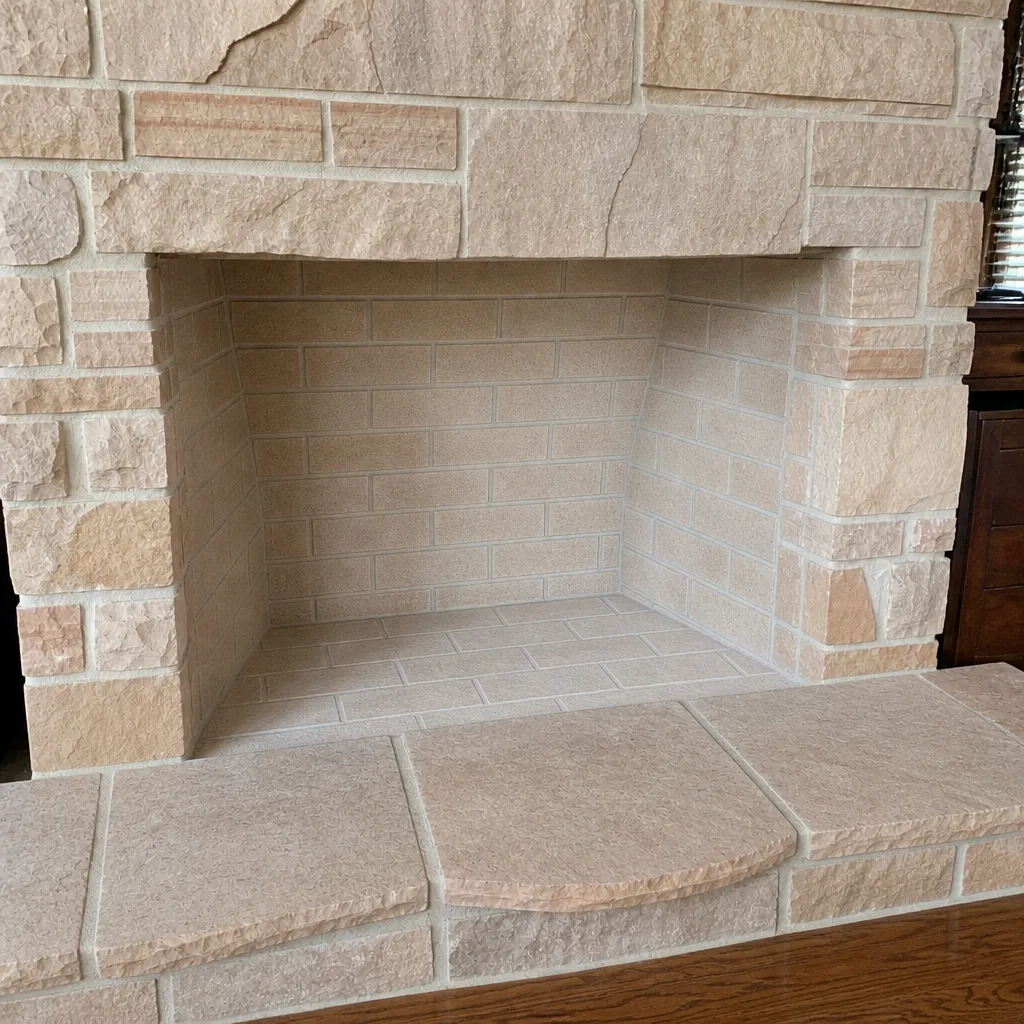
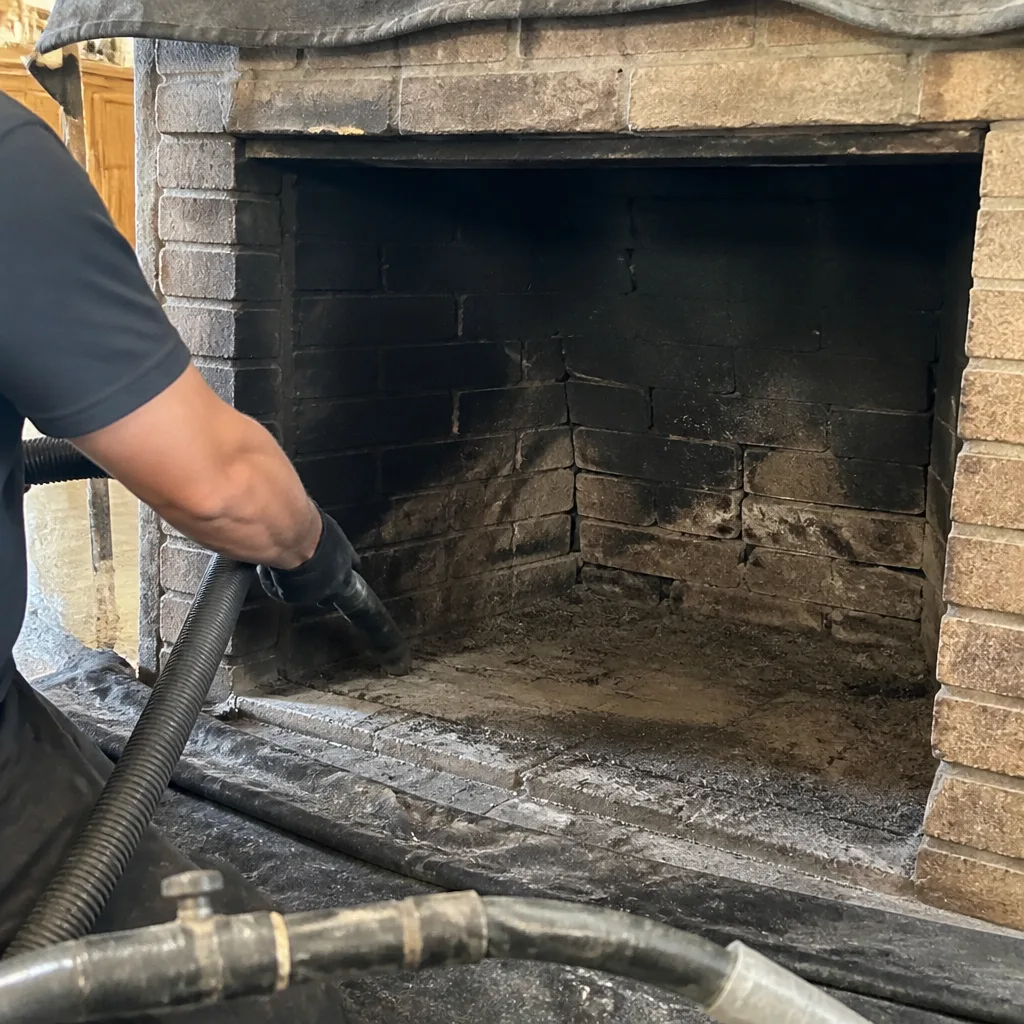
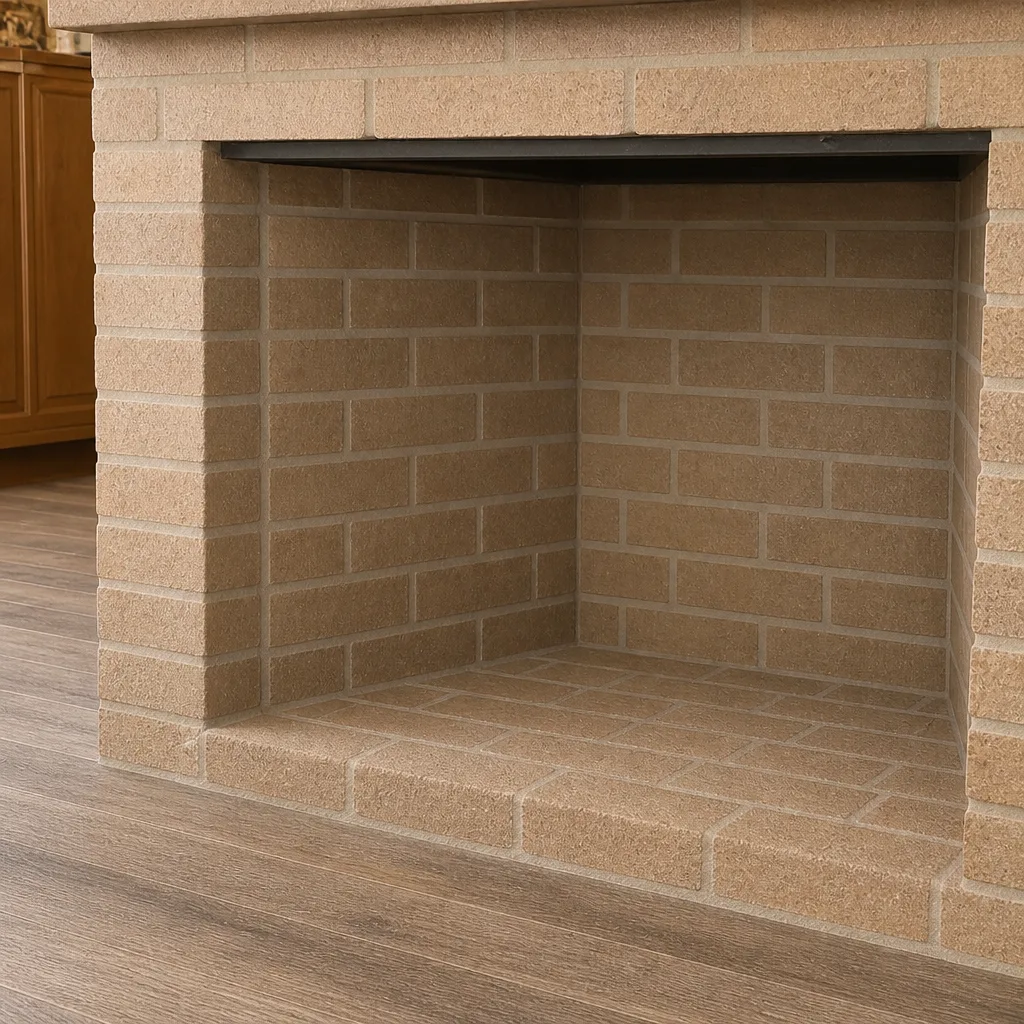
See the difference
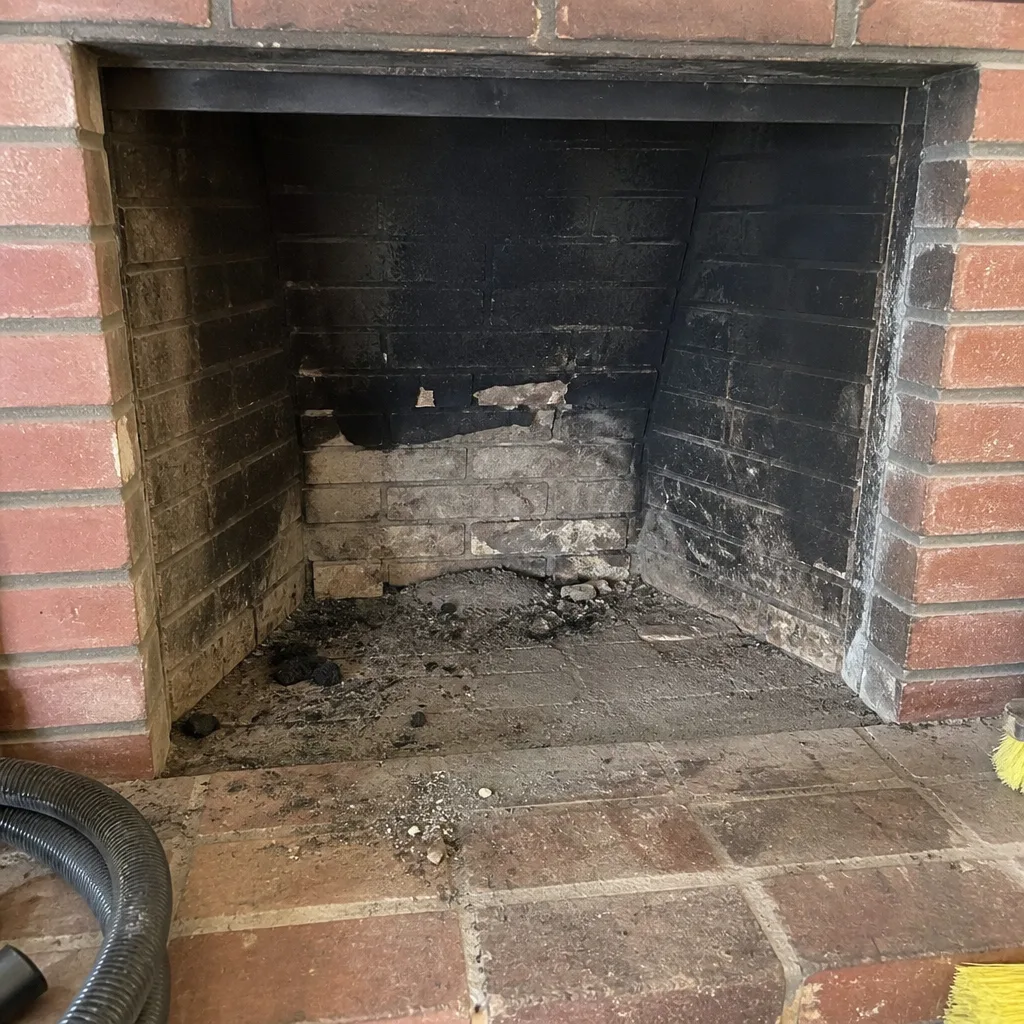 Before
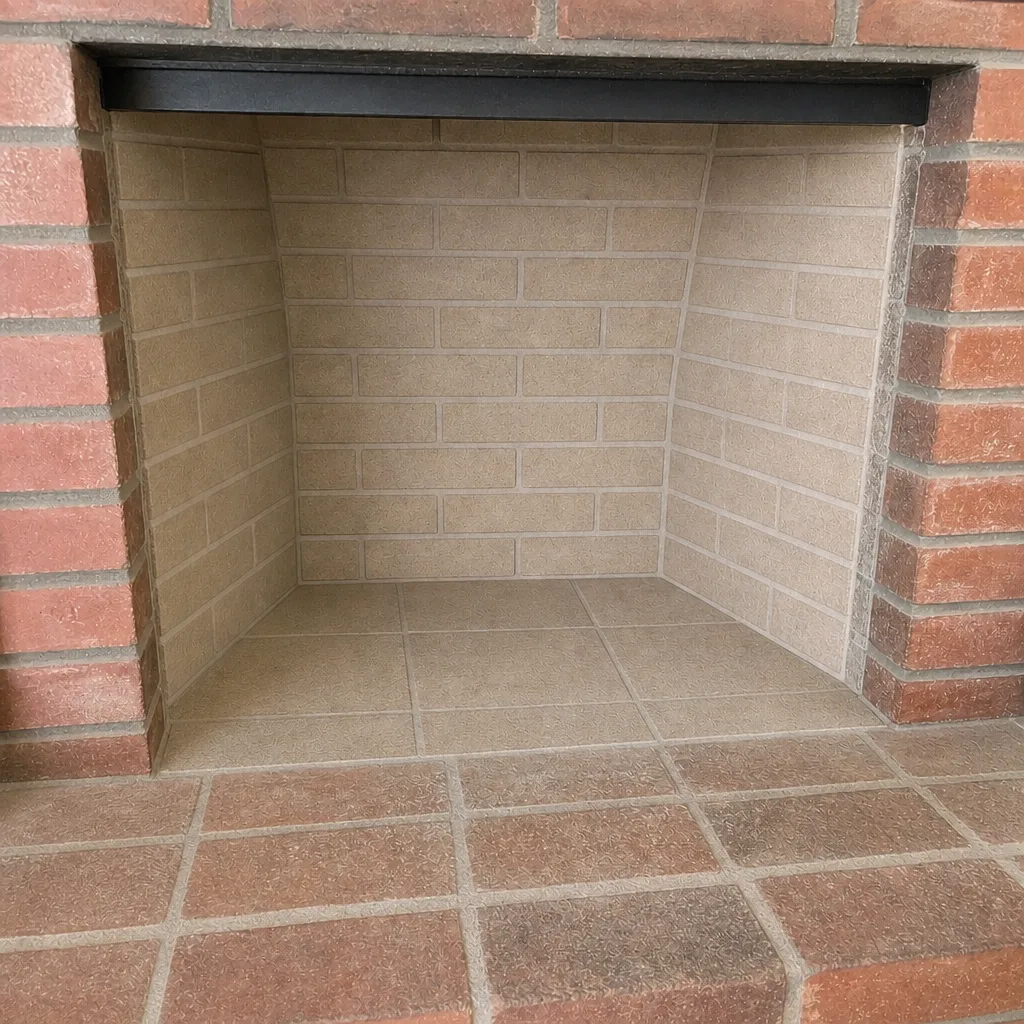 After
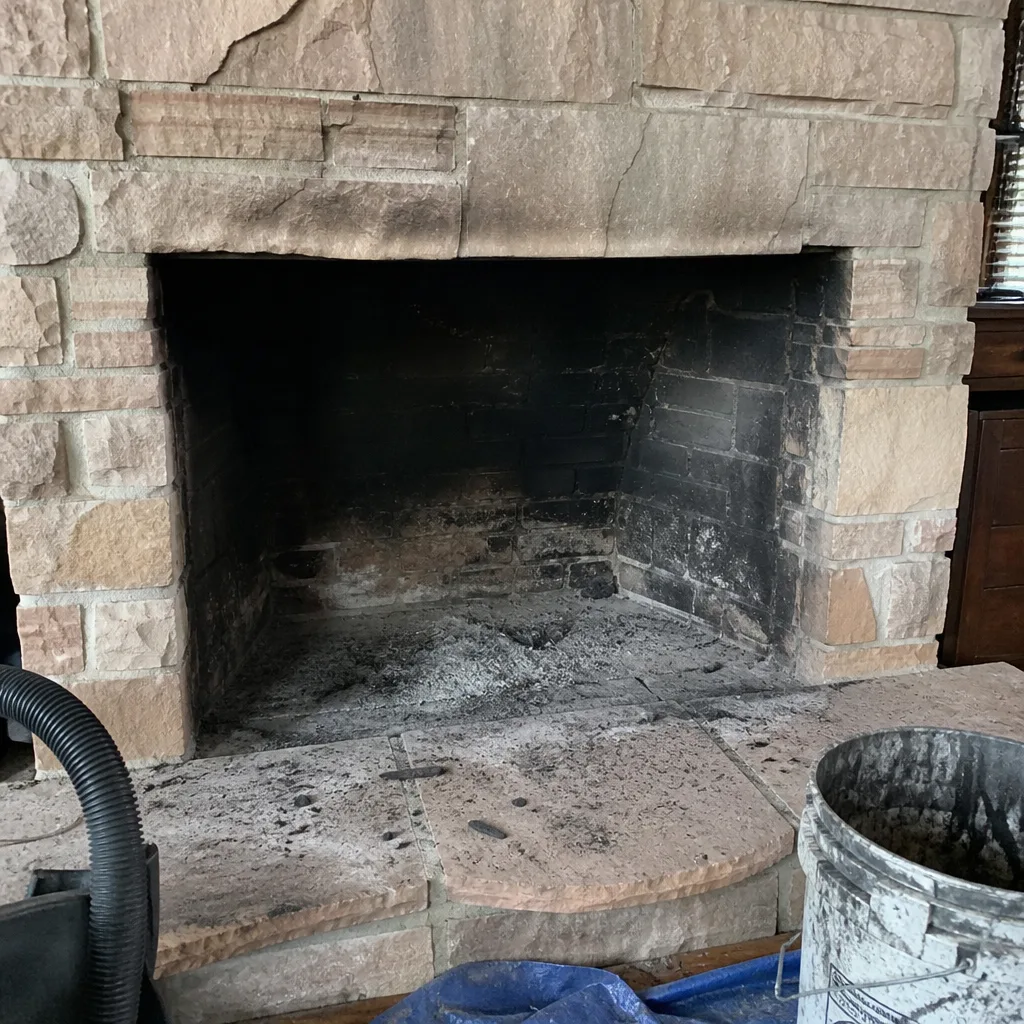 Before
 After
 Before
 After
When to Call a Professional
Some symptoms you can reason through on your own. Some you shouldn’t touch. Call a professional if you smell gas at any point, if the pilot won’t hold even after a careful relight, if you hear a roar or popping, if you see cracked tile or crumbling mortar inside the firebox, or if the white efflorescence stain has spread across the chase. Call us if you’ve already tried the window test and the exhaust-fan test and smoke still spills into the room – that’s a pressure problem too complex to fix with a cracked window. And call if it’s been more than a year since the last sweep, regardless of symptoms.
Chandler Chimney Sweep offers free estimates in Chandler. We diagnose, we clean, and we repair under one roof, so you don’t get handed to a second contractor for the hard part. Call (855) 664-1862. We answer 24/7. Fast dispatch from 7am to 7pm, Sunday through Friday.
Frequently Asked Questions
Smoke spilling into the room on a clear flue is almost always a negative pressure problem in a tight house, not a blockage. Crack a window nearby and relight a small fire; if the smoke stops, pressure is the cause and an outside-air supply or flue upgrade is the real fix.
Most homes with an active fireplace should be swept once a year, and more often if you burn frequently or use unseasoned wood. A camera inspection tells you whether a full sweep is necessary this season or whether it can safely wait until the next burn cycle.
Look for dark stains around the damper, puffy honeycombed creosote on a camera inspection, or a lingering acrid smell in the firebox even when it’s cold. Any of these signs means the flue needs a professional inspection before the next fire.
Yes. White efflorescence means water is moving through the masonry, and it predicts liner damage if left alone. The fix depends on the source, whether that’s a failed crown, a cracked chase, or a missing cap, so a professional inspection is the right first step.
The most common cause is a dirty or misaligned thermocouple, not a failed ignition system. It’s a fuel-gas component, so it’s not something to adjust yourself. Call (855) 664-1862 for a free estimate and we’ll diagnose the pilot and the flue together.
Yes. Mineral deposits from hard water build up on cap mesh, spark arrestors, and damper linkage, and the deposits accelerate corrosion. The first symptom is usually a chalky crust on the cap, followed by sticking dampers and rust streaks down the chase.
The Bottom Line
Troubleshooting a chimney is about matching a symptom to a root cause before spending money. Pressure problems come and go with fans; blockages are consistent. Efflorescence means water; a roar means fire. A pilot that won’t hold is usually a thermocouple, and corrosion on the cap usually traces back to hard water. Work the simple causes first, then let a camera inspection settle the rest. That’s the difference between a targeted repair and a guess, and in Chandler, where tight construction and hard water add two extra variables most guides don’t mention, it’s a distinction that pays for itself.
Call (855) 664-1862 for a free estimate on chimney sweeping, chimney repair, or dryer vent cleaning. We answer 24/7. Fast dispatch from 7am to 7pm, Sunday through Friday.
Written by the team at Chandler Chimney Sweep.