
Last updated November 15, 2026
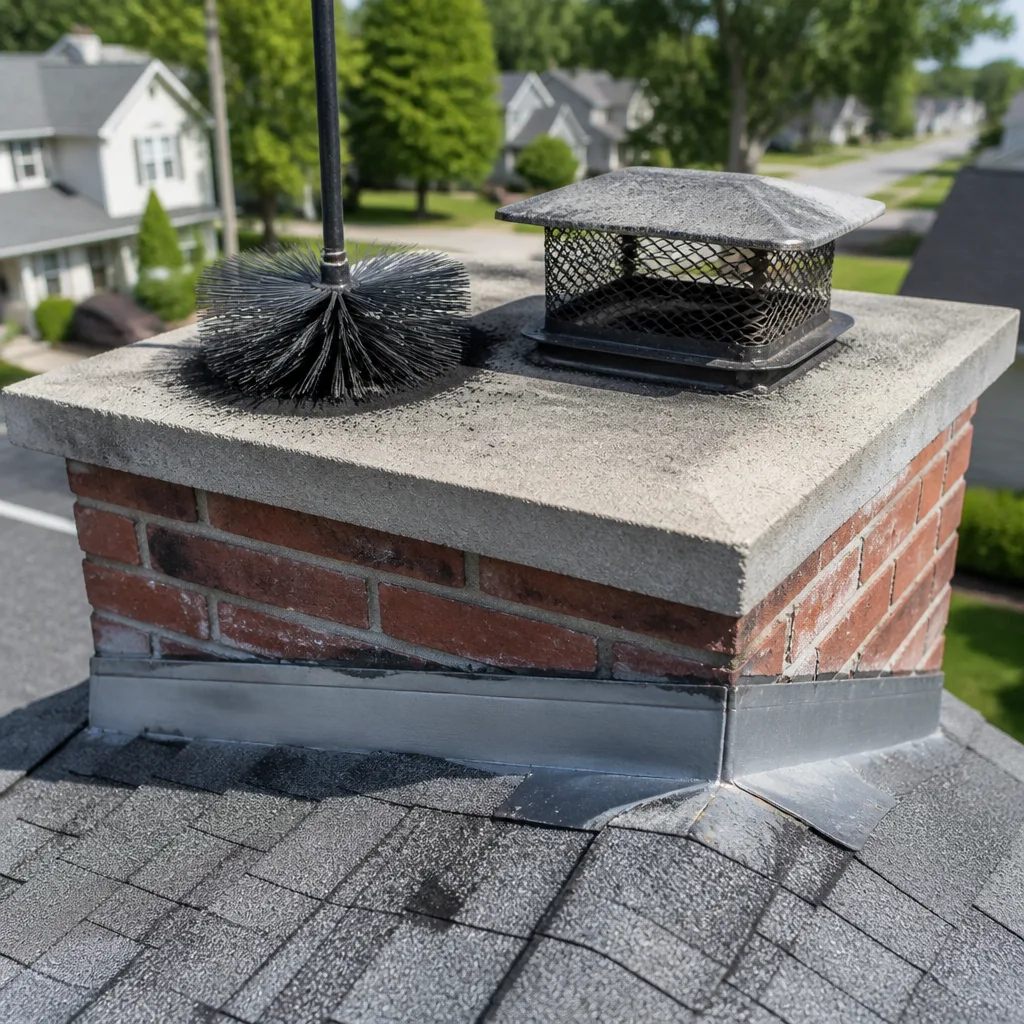 Sweep & inspection
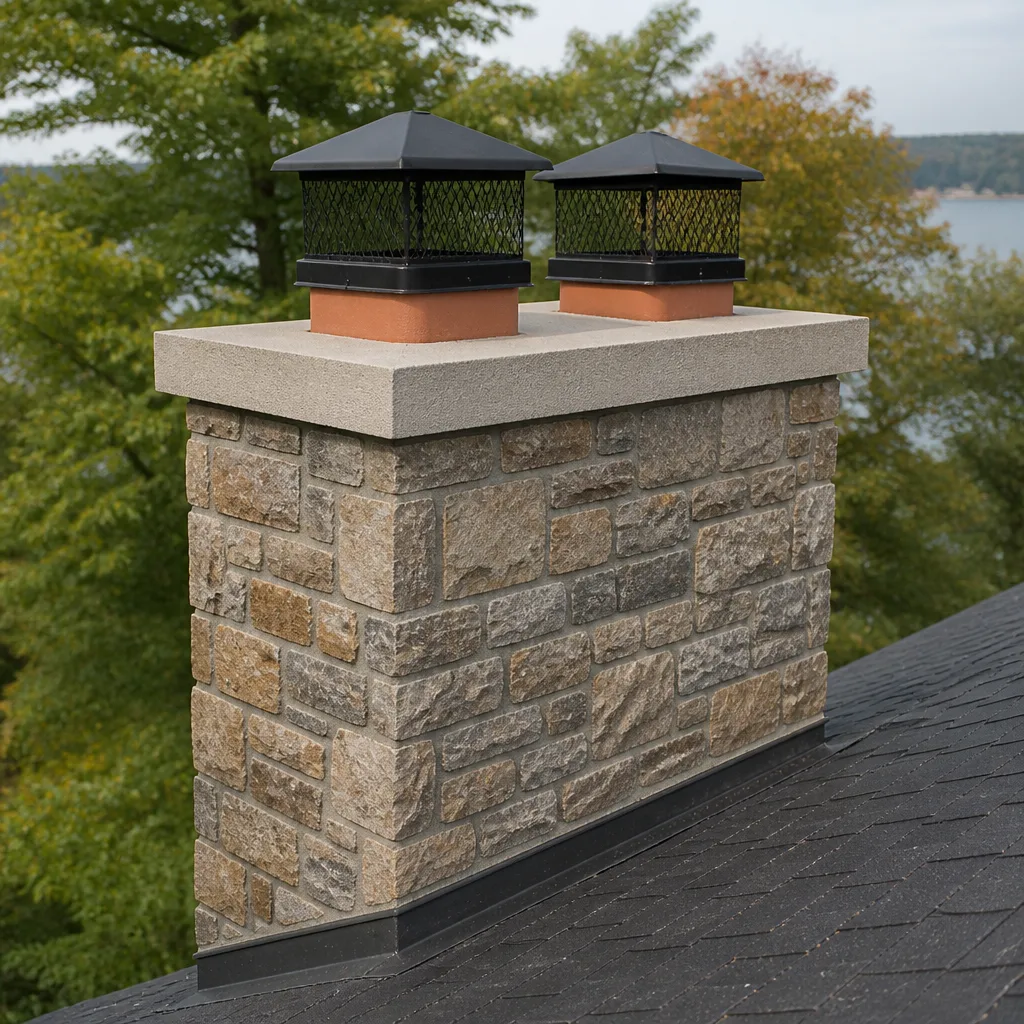 Caps & crowns
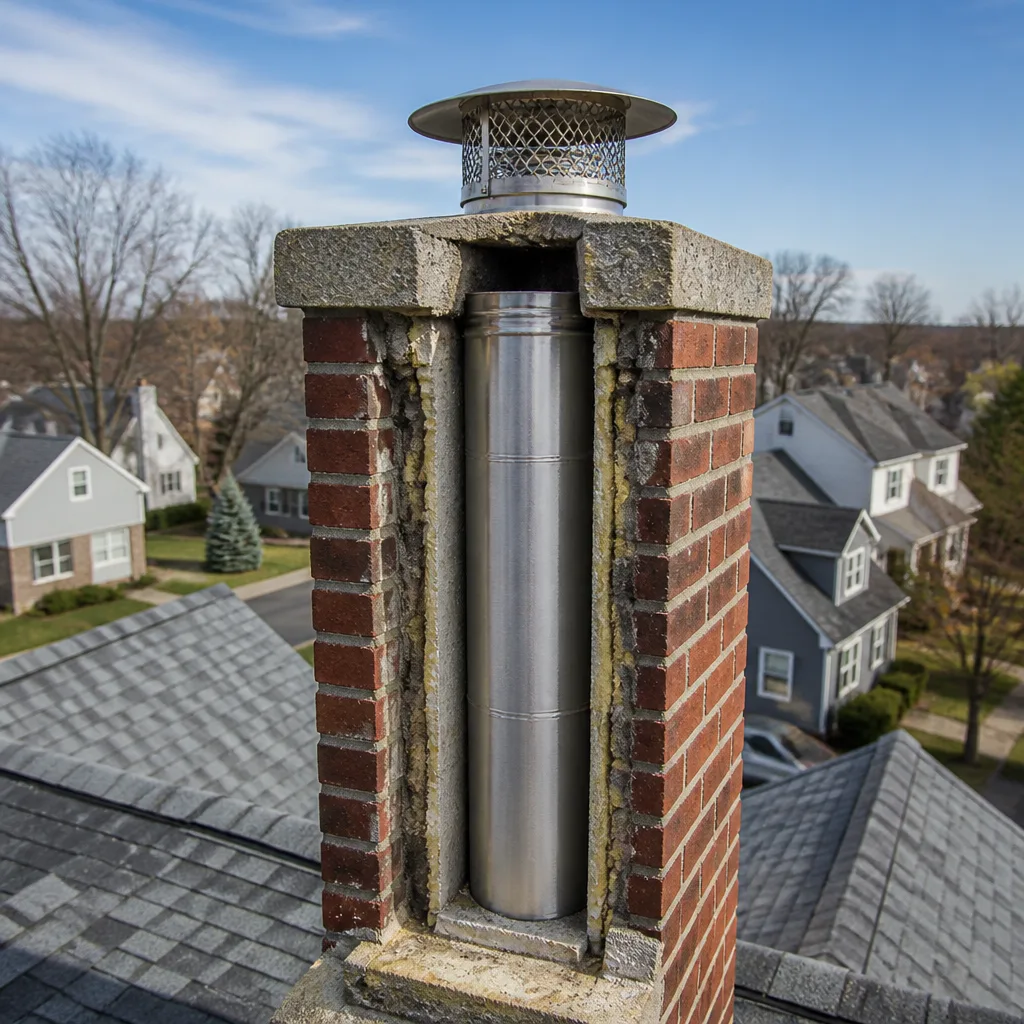 Flue relining
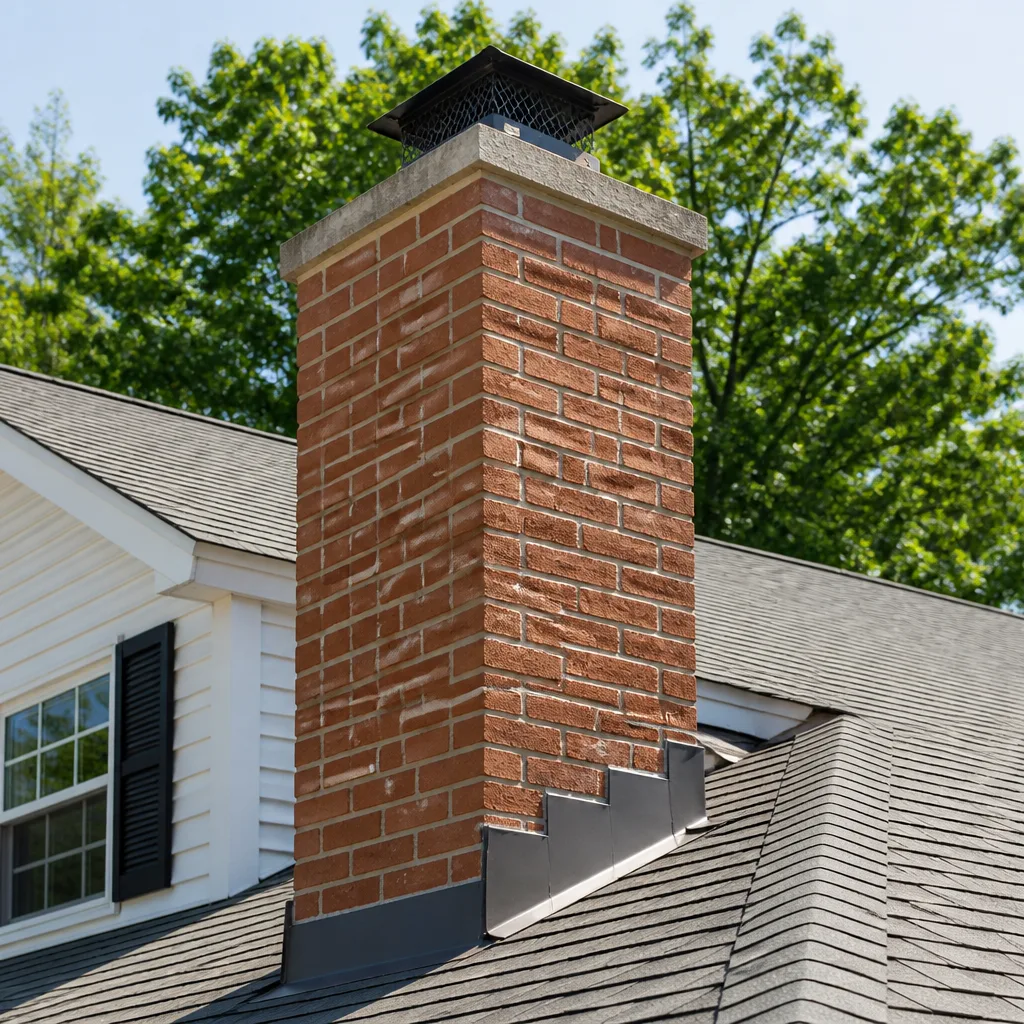 Masonry repair
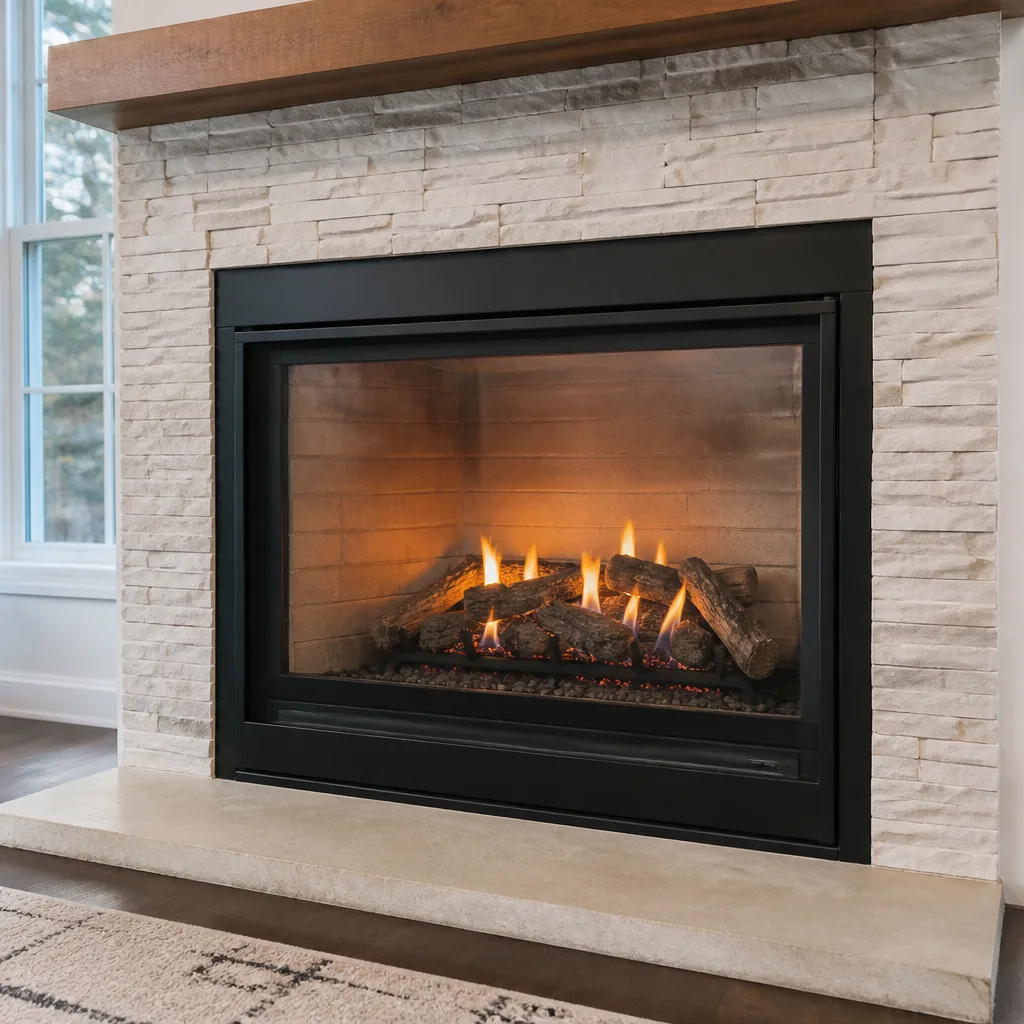 Gas fireplace service
Level 1 sweep and inspection to the NFPA 211 annual standard - flue, crown, cap, and flashing checked and photographed
Chimney sweep logs do not sweep chimneys. They loosen some creosote - which then falls where a brush and vacuum still have to collect it.
Chimney Cleaning Emergency Preparedness Guide for Chandler Homes
A chimney fire can burn above 2,000°F inside the flue while showing almost nothing from the driveway. Homeowners have described hearing a low roar like a distant train, or noticing a glow at the top of the chimney, long after the fire had already started. The dangerous part isn’t the flames you can see. It’s the creosote burning inside a flue you can’t see, and the three minutes when you have to decide what to do. This guide walks through how to recognize an active chimney fire, the exact response order, what to tell 911, and what has to happen before the fireplace is safe to use again. It’s written for Chandler homes, where monsoon debris and desert pests create problems that look minor until they aren’t.
Quick Answer
If you suspect a chimney fire, get everyone out of the house, call 911, and don’t try to fight it yourself. Tell the dispatcher it’s a chimney fire, not just a structure fire, and describe what you’re seeing and hearing. Once the fire department clears the house, no fireplace or wood stove should be used again until a qualified technician has inspected the flue with a camera. In Chandler, the most common setup for a chimney emergency is a blocked or glazed flue that hasn’t been swept in years, which is why a booked sweep matters more than a rushed one.
Styles & brands we work with
- Sweep & inspection
- Caps & crowns
- Flue relining
- Masonry repair
- Gas fireplace service
Table of Contents
- How to Recognize a Chimney Fire While It’s Happening
- The Correct Response Sequence: The First Three Minutes
- Why Closing the Damper Is More Complicated Than It Sounds
- What to Tell the 911 Dispatcher About a Chimney Fire
- After the Fire: Inspection, Documentation, and Insurance
- Chandler-Specific Risks: Monsoon Blockages and Pest Intrusions
- Preparedness Checklist for Chandler Homes
- How Often Should a Chandler Chimney Be Swept?
How to Recognize a Chimney Fire While It’s Happening
An active chimney fire announces itself in ways most people have never been taught to hear. It’s not a roar you recognize from a movie. It’s a low, sustained sound, almost like wind pulling through a pipe, sometimes with a crackling that gets louder and more rhythmic. The point of this section is to teach you the three channels of evidence, in order of how quickly they show up in a Chandler home.
Sound. Listen carefully. The classic signature is a rumbling or roaring noise coming from the flue itself, louder than the fire in the firebox should justify. Some homeowners describe it as a jet engine at a distance. Others describe tapping or popping, which usually means the metal components are expanding. Any sustained unusual sound from the chimney is a reason to act, not a reason to wait and see.
Smell. A chimney fire has a distinct smell, different from a normal wood fire. It’s sharper, chemical, sometimes described as hot metal mixed with tar. If a fire has been burning and you suddenly smell something unfamiliar, treat it as an active event until proven otherwise.
What you can see. Some clues are obvious. Others are easy to miss:
- Glowing or shimmering at the top of the chimney, especially at night
- Dense smoke pushing out of the chimney cap, sometimes with visible sparks
- Puffy creosote flakes on the roof or in the yard the next day, which often indicate a fire burned overnight
- Warped or discolored metal chimney caps and spark arrestors
- Smoke escaping into the room through seams in the stovepipe or around the damper
- Warm or hot spots on the chimney chase in the attic or near the ceiling
The traps matter. A slow, smoldering chimney fire can run for hours without obvious flames. It only shows up as a crackling sound when someone steps outside, or as a faint glow reflected on a nearby roof. In our experience across Chandler, the hardest chimney fires to catch are the ones that burn overnight while the family is asleep, leaving only the smell of burnt creosote in the morning as evidence.
The Correct Response Sequence: The First Three Minutes
This is the sequence that matters. Memorize it now and rehearse it with everyone in the house, the way you would a fire drill. The at-the-moment instinct to grab a bucket of water or throw salt on the fire is wrong and dangerous. Below is the correct order.
- Get everyone out of the house. Adults, kids, pets. No exceptions. A chimney fire can escalate into a structure fire, and you don’t get to know which one is happening until it’s over.
- Call 911 from outside. Use a cell phone from the yard. Say the words “chimney fire.” The dispatcher needs to know what kind of event this is, because the response is different. Do not end the call until they say to.
- Close the glass doors or the stove door, but do not close the damper yet. This is where most guidance gets vague. Closing the appliance door limits oxygen to the firebox and slows the fire. Leave the damper open (more on why in the next section).
- Do not spray water into the firebox or down the flue. Water hitting a 2,000°F flue can crack masonry and ceramic, and steam can force smoke and fire back into the room. Leave the extinguishing to the fire department.
- Do not go on the roof. Not to look, not to cover the cap, not to check anything. Roofs are steep, and a chimney cap in the middle of a fire is a life-threatening object.
- Move vehicles out of the driveway if you can do it quickly. Do this only if it’s a short, safe walk from where you’re already standing. If the fire department is already arriving, don’t get in the way.
- Wait for the fire department to clear the scene. Stay outside. Even after the visible activity stops, the flue is still hot, and hidden fire can reignite.
Two things you should never do during an active chimney fire, even though instinct pushes you toward both: don’t prop open the firebox door to “let it breathe” (this feeds oxygen to a fire that’s already inside your structure), and don’t throw a wet towel or bucket of water onto the fire from inside the room. Neither works, and both can hurt you.
None of this is a substitute for the fire department. It’s the sequence that keeps everyone alive until they arrive and tells you what to do with your hands while you wait. The same discipline applies outside of emergencies: if you’ve never booked a chimney sweep for this house, that’s the single decision that changes what happens on the night you need this page.
Why Closing the Damper Is More Complicated Than It Sounds
The damper is the metal plate above the firebox that controls airflow. It always sounds like the right lever to pull during a chimney fire. It usually isn’t, at least not first. Here’s the reasoning, because this is one of those cases where an incomplete understanding can make the situation worse.
Closing the damper starves the fire of air. That’s the goal. But creosote fires are efficient at finding oxygen through seams, appliance gaskets, and the very gaps in the chimney chase that make old homes a challenge. If you close the damper while the flue is still loaded with hot creosote, you can push the smoke – and potentially flame – into the living space through the seams around the firebox or stove pipe. That turns a chimney fire into a room fire, which is exactly the escalation you’re trying to avoid.
What to do instead comes down to sequence:
- Close the appliance door first, not the damper. Glass doors on a fireplace, the door on a wood stove, the loading door on an insert. This cuts the firebox’s oxygen supply without pushing anything into the room.
- Leave the damper open and let the fire department close it. They know when it’s safe to limit the flue, and they have the equipment to do it without opening a path into your house.
- If you smell smoke inside or see it coming through seams, get out immediately. That’s not a sign to adjust the damper. It’s a sign the fire has already compromised the boundary between the flue and the house.
On the morning after, ask the fire department specifically whether they consider the flue stable, and whether they recommend the damper stay in a certain position until the chimney is inspected. Write it down. You’ll need the details for the inspection and for the insurance conversation that starts immediately afterward.
What to Tell the 911 Dispatcher About a Chimney Fire
Dispatchers in Chandler, like dispatchers everywhere, route and equip responses based on what the caller says. A chimney fire is not the same event as a structure fire, and the information you give in the first 30 seconds genuinely changes what arrives and how fast. Give the call calmly and in this order:
- The words “chimney fire.” Lead with those two words. Everything else can follow. The dispatcher needs the classification before the address, before the story, before what you were cooking for dinner.
- Address and a landmark. In Chandler, “third house on the left past the cul-de-sac” lands faster than a street address alone. Give both.
- What you can see and hear. “Roaring inside the flue, smoke and sparks from the top” is more useful than “it seems pretty bad.” Describe sound, smoke, flame, and glow specifically.
- Whether anyone is inside. Confirm all occupants are out, or say clearly if someone is still in the house.
- What type of appliance is involved. Fireplace, wood stove, insert, or gas. This helps the crew anticipate what they’re dealing with.
- What’s attached to the chimney. If the flue serves a wood stove on an interior wall, or runs through an attic, say so. It changes the way the crew approaches the structure.
- Don’t hang up. Stay on the line until the dispatcher releases you. They may have follow-up questions as units respond.
The biggest mistake callers make is burying the classification. A call that starts with “our fireplace is making a weird noise and we think maybe something is wrong but it might be okay” gets routed and prioritized differently than “we have a chimney fire.” You are not overreacting by naming it. If it turns out to be something small, that’s a good outcome and no one will hold it against you.
After the call, don’t stand in the driveway taking video. Don’t go back into the house for a phone charger. Don’t walk the perimeter to look at the roof. Stand somewhere safe and stay reachable.
After the Fire: Inspection, Documentation, and Insurance
The fire being out does not mean the fireplace is safe to use again. It means the emergency phase is over and the professional phase begins. Two tracks run in parallel starting the same day: the inspection track and the insurance track.
The inspection. A qualified technician needs to run a camera down the full length of the flue, check the liner for cracks, warping, or mortar damage, look at the smoke chamber and damper, inspect the cap and spark arrestor, and confirm the chimney chase isn’t compromised. In our work, we often find damage that isn’t visible from the firebox: hairline cracks in a clay liner, a shifted flue tile, or a HeatShield-worthy smoke chamber that needs resurfacing before the fireplace can safely be used. A confident “it looks fine” from the firebox is not the same as a camera inspection of the full run. Ask for a photo report and look at it yourself.
After a chimney fire, the inspection is not optional. It’s the difference between a fireplace you can use next winter and one that needs repair work. It’s also what your insurance carrier will ask for.
The insurance track. Start it the same day, before anything is cleaned or repaired. Here’s the sequence that makes claims go smoother:
- Photograph the scene before moving anything. Chimney top, firebox, room, any affected areas.
- Get a copy of the fire department’s report number, or note the incident number the dispatcher gave you.
- Keep any damaged parts of the flue or cap; don’t throw them out before the adjuster sees them.
- Get the inspection performed by a qualified technician and keep the written report and photo documentation.
- Submit the inspection report along with your photos, not instead of them.
Insurance carriers vary in what they cover and how they document, so work with your adjuster on the specifics. What you can do is make sure the inspection report exists, is detailed, and shows the damage clearly. A camera inspection and a photo report are standard parts of a professional post-fire evaluation because claims adjusters need evidence, not impressions. Ask for that evidence in a form you can hand over.
If the inspection turns up damage to the liner or smoke chamber, repairs may involve HeatShield resurfacing, a DuraFlex liner system, or both. A single contractor who does cleaning, inspection, and repair means no handoff and no gap in records between the sweep who found the problem and the crew who fixed it. That continuity is useful when you are also answering insurance questions.
Chandler-Specific Risks: Monsoon Blockages and Pest Intrusions
Chandler summers bring monsoon storms that throw roof debris, twigs, and dust into the flue and across caps. Many of those blockages don’t get noticed until the first cold night, when the fireplace is lit and the smoke goes where it shouldn’t. That’s the emergency. It didn’t start that night. It started in July.
Two specific patterns show up here more than homeowners expect:
Monsoon blockages. Wind-driven twigs, palm fronds, and dust collect on chimney caps and in the flue. A partially blocked flue smokes back into the room. A fully blocked flue can force carbon monoxide into the living space, and that’s a medical emergency, not a chimney problem. If the smoke won’t draft, put the fire out, get everyone outside, and treat it as an emergency.
Pest intrusions. Desert birds, especially the ones that nest in eaves and caps, find uncapped chimneys. So do roof rats and the occasional wasp colony. A nest in the flue looks like a minor smell issue until the first fire. Then the nest catches, the fire runs up the flue, and suddenly you have an emergency-level condition from what looked like a nuisance a month earlier. A cap that fits properly is the single best protection, and it’s part of a normal chimney inspection.
Both of these are why a scheduled sweep beats a reactive call. A sweep booked before burning season catches monsoon debris and pest nests while they are still small problems. The right materials and a trained eye find the damage before it becomes hot metal and a 911 call. dryer vent cleaning is the same story for a different system: the most common calling card of a dryer vent fire is lint buildup nobody looked at for years. We offer it as a standalone service for that reason.
Preparedness Checklist for Chandler Homes
Preparedness is unglamorous and it takes an hour. Do it once and you’re covered for the season. The checklist below is what we recommend to Chandler homeowners who want to be ready before they need to be.
- Book a chimney sweep and camera inspection before burning season. Not during the first cold week. Before. That gives you time to deal with what the camera finds without pressure.
- Install a chimney cap that fits. It keeps out monsoon debris, birds, rats, and rain. A cap that’s loose or missing is an invitation to the whole list.
- Check smoke and carbon monoxide detectors. Test them, replace batteries, and make sure there is a CO alarm on every level of the home and outside the sleeping areas.
- Talk through the response sequence with the household. Everyone should know to get outside, call 911, and use the words “chimney fire.” Practice it like a fire drill.
- Keep a fire extinguisher where you can reach it from the main living area and know how to use it.
- Clear the roof zone around the chimney of debris at the end of monsoon season, and again before the first fire.
- Look up at the chimney once a month during burn season. If you see smoke that shouldn’t be there, or hear anything unusual, stop using the fireplace and call.
- Note anything unusual about the smell. A change in smell is often the earliest sign something is off.
If you’re not sure whether your home has ever had a professional inspection, assume it hasn’t. That’s the most common starting point we see in Chandler homes, and it’s completely fixable.
How Often Should a Chandler Chimney Be Swept?
The general industry standard is once a year for a wood-burning appliance in regular use, and more often if you burn frequently or notice a buildup. In Chandler, add a second consideration: monsoon debris and pest activity make an annual sweep more than a routine. It’s the annual check that catches the blockages that would otherwise be a cold-night emergency.
A sweep should include more than a brush down the flue. Here’s what a proper sweep and inspection includes:
- A camera inspection of the full flue length, with photos or video you can look at
- Removal of creosote at every stage, including glazed creosote that brushing alone doesn’t touch
- Cleaning of the smoke chamber and damper area
- Inspection of the liner, cap, and crown
- A written report noting any damage or needed repairs
- A flat-price sweep agreed before booking, so you aren’t surprised at the end
Around 12 years of technician experience is what our team brings to a sweep. It’s not the years that matter, though. It’s the camera, the written report, and having a technician on the job who can also do the repair work if the inspection finds something. The right materials – DuraFlex liners, HeatShield resurfacing, Gelco components – are part of what separates a sweep-only brush from a correctly diagnosed and repaired flue.
Common Mistakes to Avoid
- Waiting to see if the sound goes away. In an active chimney fire, waiting is the mistake that turns a chimney fire into a house fire. Get out and call 911 the moment you suspect it.
- Closing the damper during an active fire. It sounds right, but it can push hot creosote and smoke into the living space. Close the appliance door, not the damper.
- Spraying water down the flue or firebox. Water on a hot flue can crack the liner and force a steam-and-fire reaction back into the room. Leave it to the fire department.
- Using the fireplace again before the flue is inspected. A camera inspection is not a formality. It’s the only way to know what the fire did inside the chimney.
- Assuming monsoon debris and pest nests self-clear. They don’t. A blocked flue looks fine until it’s lit. A sweep before burning season is the answer.
- Calling the insurance company before documenting. Photograph the scene first. Adjusters need evidence, and “we could have shown you” doesn’t refile.
- Hiring a sweep who can only brush the flue. In Chandler, where blockages and damage often overlap, you want a contractor who can diagnose, clean, and repair under one roof. A single qualified contractor beats a handoff every time.
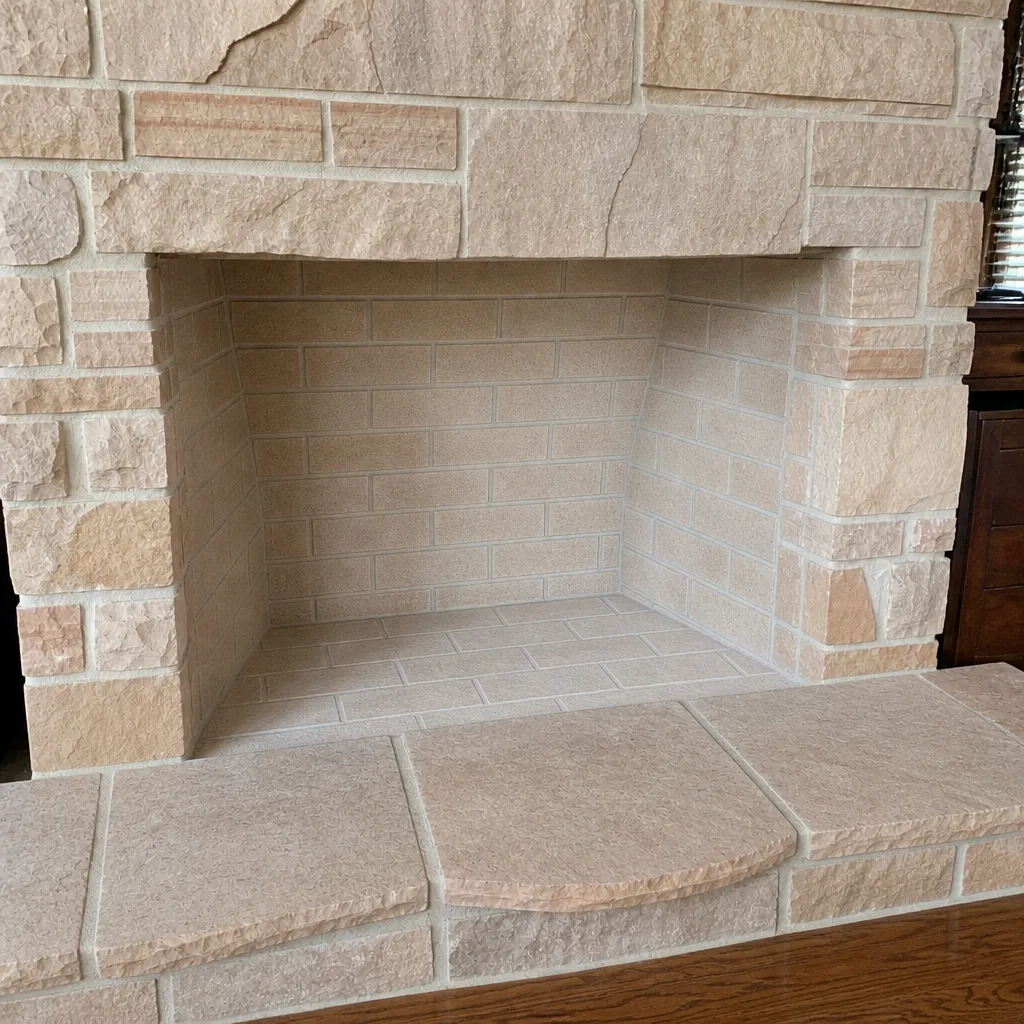
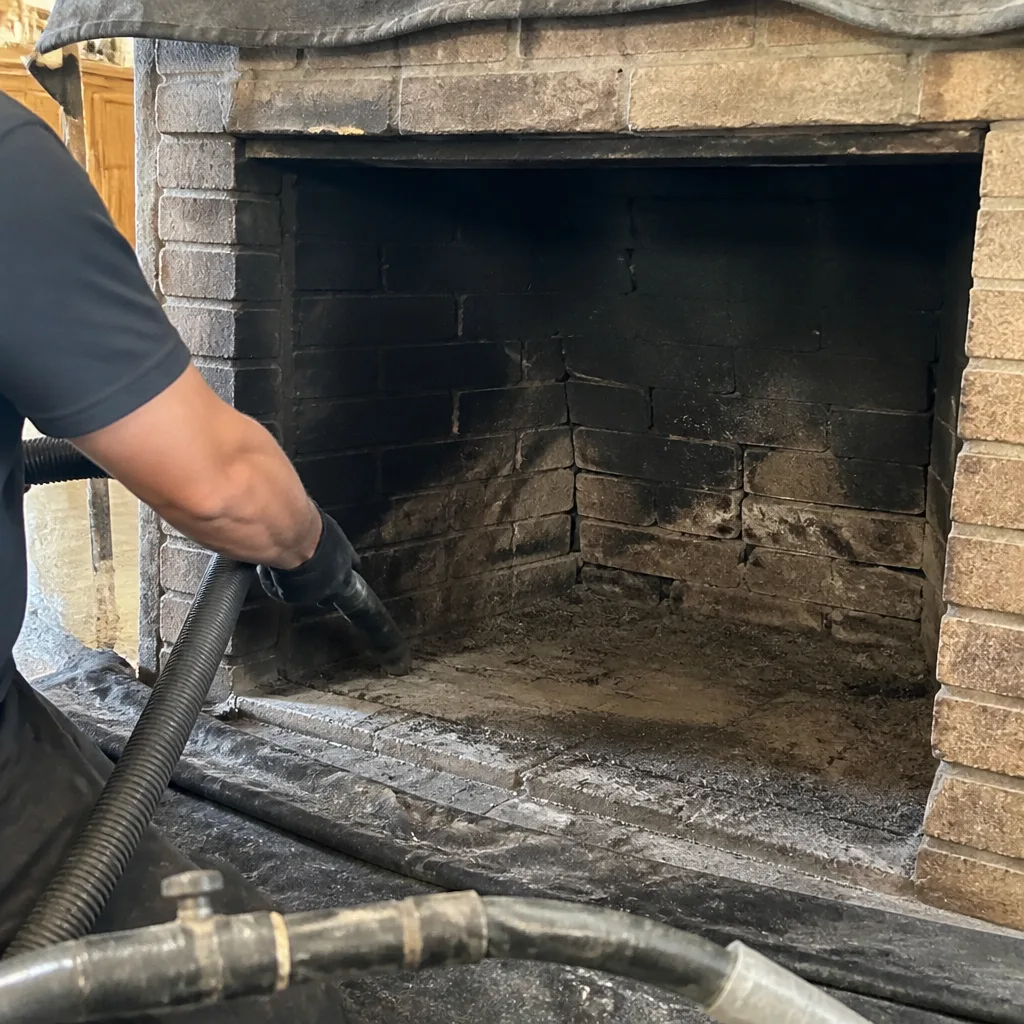
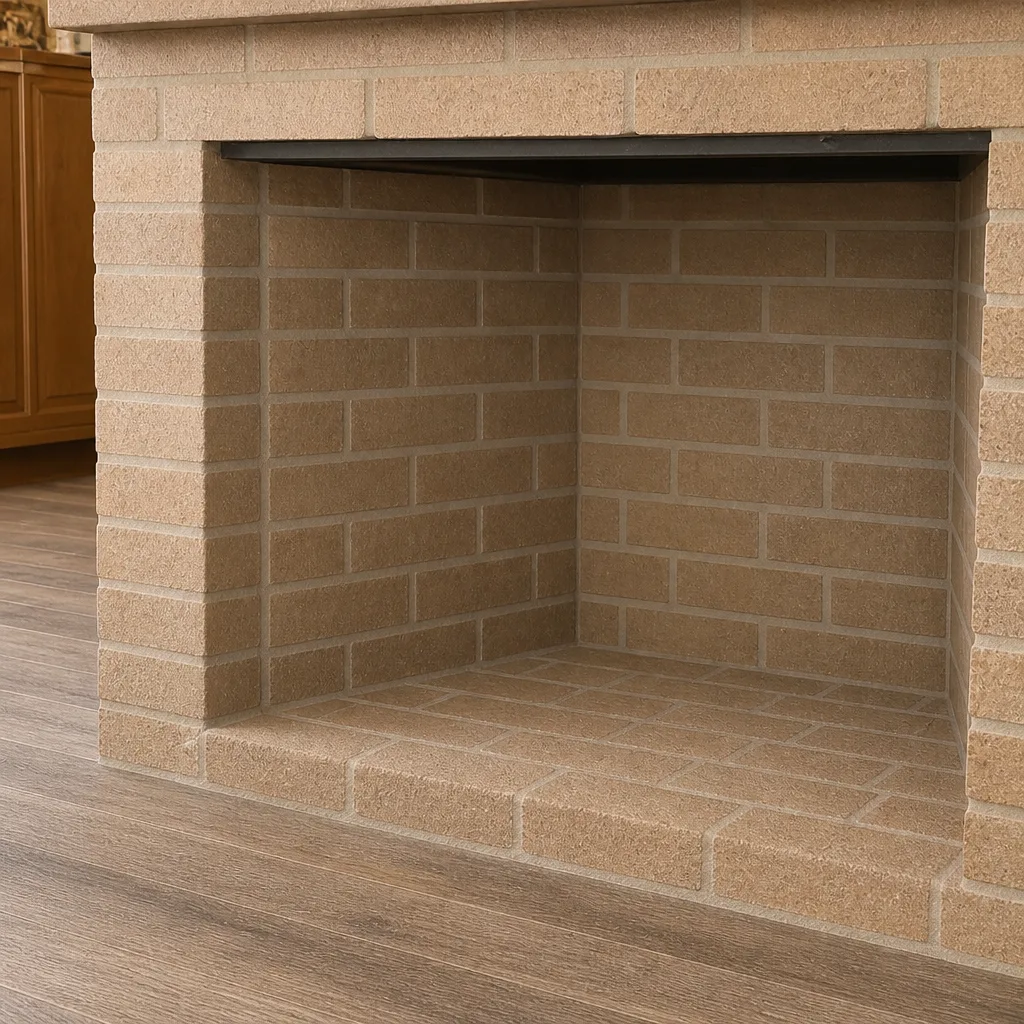
See the difference
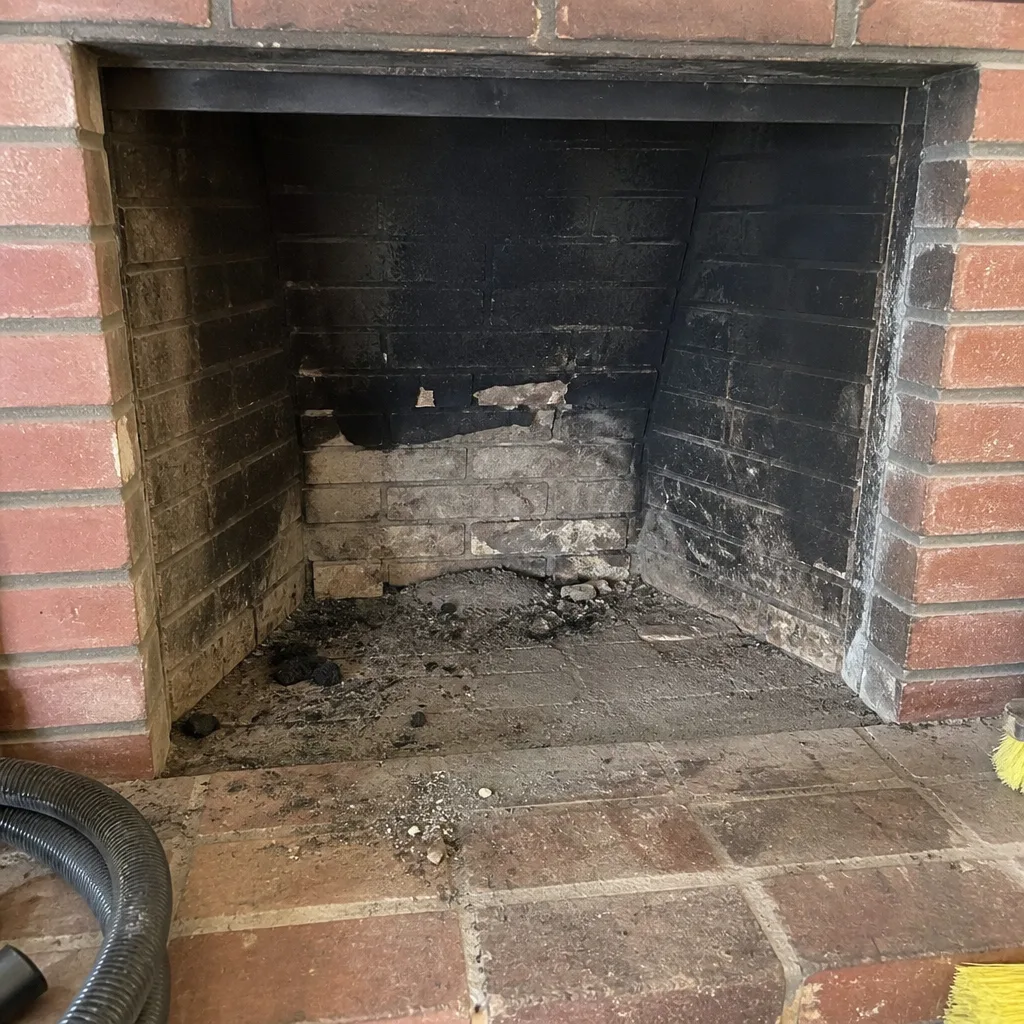 Before
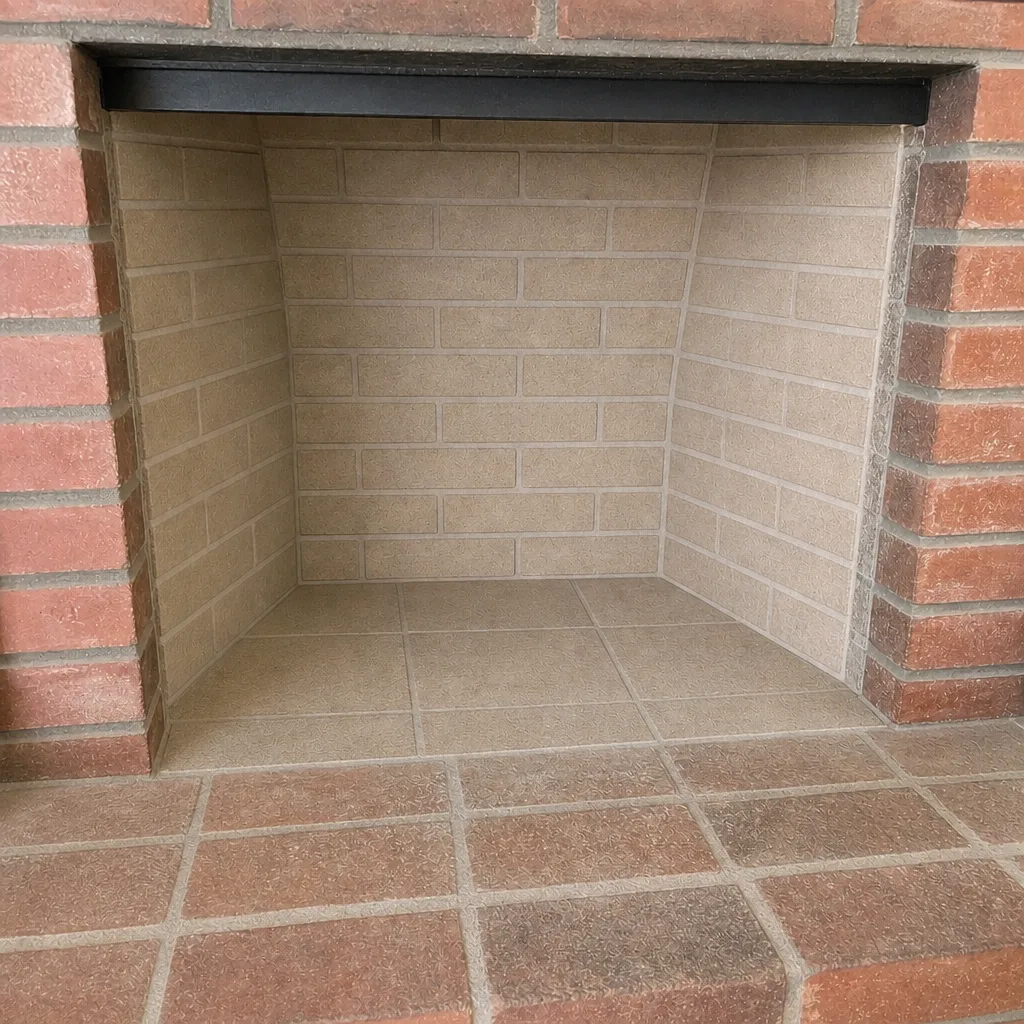 After
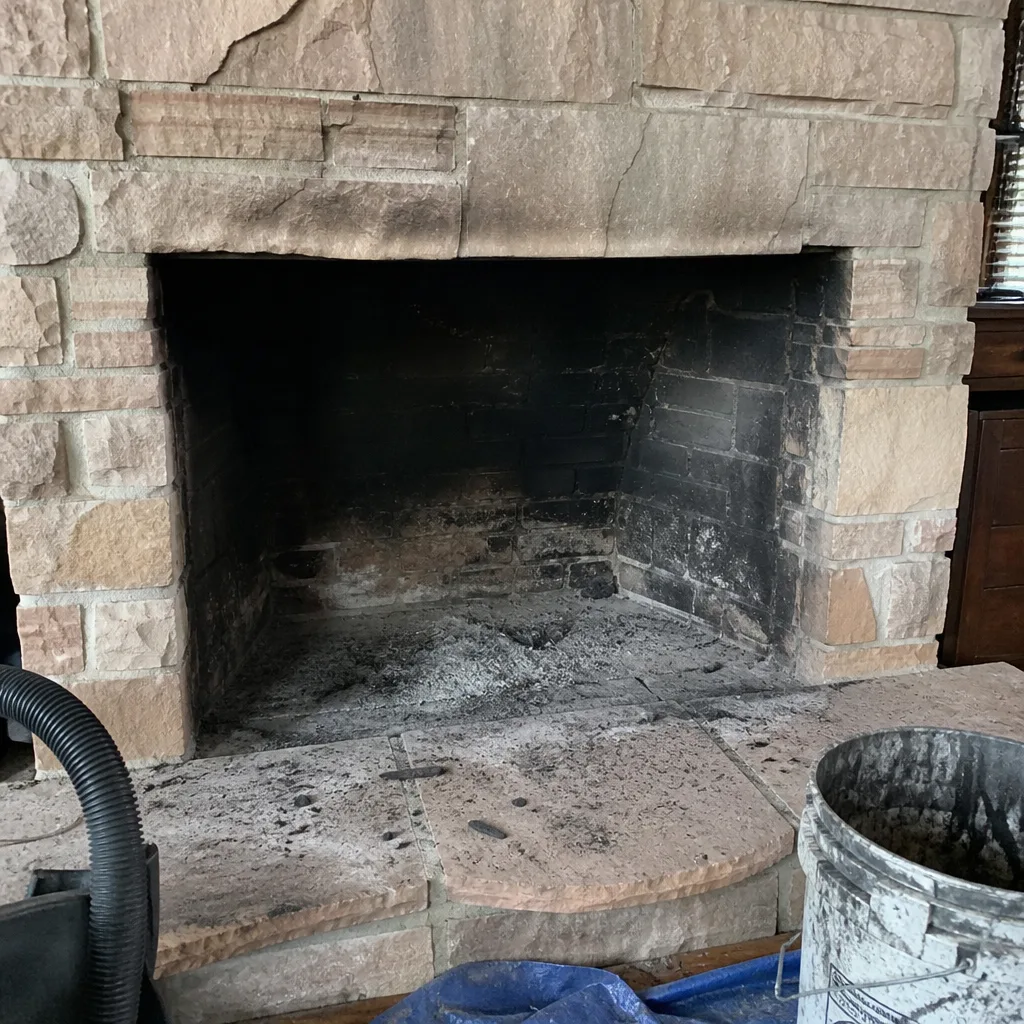 Before
 After
 Before
 After
When to Call a Professional
Call us immediately if you’ve had an active chimney fire and the flue has not been inspected. Call if you’ve never had a sweep and you’ve been burning every winter, if the fireplace smokes into the room, if you see creosote flakes on the roof or in the yard, or if you’ve noticed birds, rats, or wasps around the chimney cap. Call if you’re buying a Chandler home with a fireplace and no documentation of the last inspection. Call if you’re not sure. We offer Chandler Chimney Sweep services including chimney sweeping, dryer vent cleaning, and chimney repair, and we diagnose, clean, and repair under one roof. If you have an emergency on your hands, call (855) 664-1862. We answer 24/7. Fast dispatch from 7am to 7pm, Sunday through Friday. Free estimates are available, and the price is set per job by a written estimate.
Frequently Asked Questions
You often don’t know directly. The most reliable signs are physical evidence afterward: puffy creosote flakes on the roof or in the yard, warped or discolored chimney caps, cracked or glazed flue tiles, and the smell of burnt creosote inside the house. Some people hear a roar or a crackle during the event, others notice a glow from the chimney top. If you suspect you’ve had one, get a professional camera inspection before you burn again. Call (855) 664-1862 for a free estimate and inspection discussion.
Usually not from the outside. A chimney fire can burn inside the flue with almost no visible flame, and often the only exterior clue is dense smoke, a glow at the cap, or sparks. The sound is often more informative than the sight: a roar or rumble that’s louder than the firebox should justify. When in doubt, treat it as active and get out.
It sounds like a low, sustained roar or rumble from inside the flue, sometimes described as a distant train or jet engine. Other homeowners hear tapping, popping, or crackling that gets louder and more rhythmic. Any unusual, sustained sound from the chimney while a fire is burning is a reason to act, not a reason to wait.
No, not first. Close the appliance door (glass doors or the stove door) to limit oxygen to the firebox, but leave the damper open. Closing the damper during a fire can push smoke and hot creosote into the living space. Let the fire department handle the damper when the situation is stable.
Once a year for regular wood burning, and more often if you burn frequently or see heavy creosote. In Chandler, monsoon debris and pest activity make the annual sweep genuinely important, because a blocked flue looks fine until the first fire of the season. Book it before burning season, not during the first cold week.
Creosote builds up. A partial blockage smokes back into the room. A full blockage forces carbon monoxide into the living space, which is a medical emergency. A creosote-loaded flue is what catches fire when the first hot fire of the season goes up the chimney. If you’ve skipped a year, book a sweep and a camera inspection now. Call (855) 664-1862 for a free estimate.
No. The fireplace should not be used until a qualified technician has inspected the full flue with a camera and confirmed there is no damage. Cooking, drying out, or “just one small fire” before the inspection is the mistake that turns a manageable repair into a second emergency. Call (855) 664-1862 to book the inspection before you use it again.
A new home still needs periodic inspection, especially after the first heating season, and a full sweep is never a bad idea before your first cold-season burn. New construction in Chandler goes up quickly, and installation details vary. A camera inspection confirms what you actually have rather than what the plans say. Call (855) 664-1862 for a free estimate.
The Bottom Line
Chimney fires are dangerous because they hide: inside a flue, behind a normal fire, under the sound of a normal burn. The three things that change the outcome are a household that knows to walk out and call 911, a dispatcher who hears the words “chimney fire” first, and a professional camera inspection before the fireplace is used again. Around Chandler, monsoon blockages and pest nests are the setup that turns a quiet smoke problem into an emergency. Book a sweep before burning season, keep the cap in place, and treat an inspection report as the difference between a fireplace you trust and one you hope about. When you’re ready for either, call (855) 664-1862. We answer 24/7. Fast dispatch from 7am to 7pm, Sunday through Friday. The estimate is free, and the written estimate sets the final price per job.
Written by the team at Chandler Chimney Sweep.